Newsroom
Find latest news & happenings at our clinic
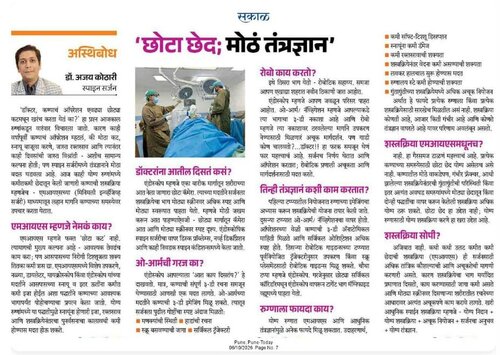
Small Incision, Big Technology: The Future of Robotic Spine Surgery Medical technology is continually transforming spine care by making complex procedures significantly more precise, controlled, and patient-friendly. Utilizing a minimally invasive, robotic-assisted approach through smaller incisions allows Dr. Ajay Kothari, a spine surgeon in Pune, to achieve enhanced precision, superior visualization, and greater control over delicate movements. This advanced technology helps minimize blood loss, post-operative discomfort, and hospital stays while facilitating a faster recovery and earlier return to normal daily activities. Throughout the procedure, the surgeon remains in complete control, leveraging robotic technology as an advanced tool to maximize surgical accuracy, safety, and patient outcomes.
spinesurgeonpune 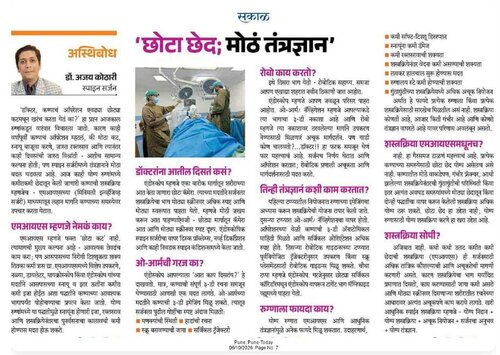
Robotic Spine Surgery |Dr. Ajay Kothari Dr. Ajay Kothari, an orthopaedic spine surgeon in Pune, highlights how advanced robotic technology is transforming modern spine surgery by supporting greater precision, visualization, and control during complex procedures. Robotic-assisted and minimally invasive techniques may help reduce blood loss, post-operative discomfort, and hospital stay while supporting faster recovery in appropriately selected patients. Importantly, the surgeon remains in complete control, with robotic technology serving as an advanced tool to enhance surgical precision and accuracy. Book Appointment Call Now
spinesurgeonpune 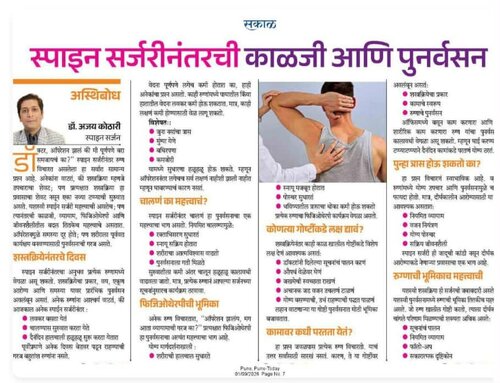
Dr. Ajay Kothari Highlights the Importance of Post-Spine Surgery Rehabilitation 🦴 Spine Surgery Doesn’t End in the Operating RoomSuccessful spine surgery is only the beginning. Appropriate rehabilitation, physiotherapy, gradual strengthening, lifestyle modification and regular follow-up are essential for a safe recovery and long-term spinal health.My latest article in Sakal highlights the key aspects of post-spine surgery care and rehabilitation, with a focus on helping patients return to an active, confident and healthy life.Because recovery is a journey—not just a procedure. #SpineSurgery #SpineRehabilitation #SpineHealth #PostSurgeryCare #BackPain #Physiotherapy #MinimallyInvasiveSpineSurgery #PatientEducation #HealthySpine #SpineSurgeon #Rehabilitation #HealthcareAwareness Read More:Minimally Invasive TLIF Surgery for Lumbar SpineTurn Your Back on Back Pain: Dr. Ajay Kothari Book Launch
spinesurgeonpune 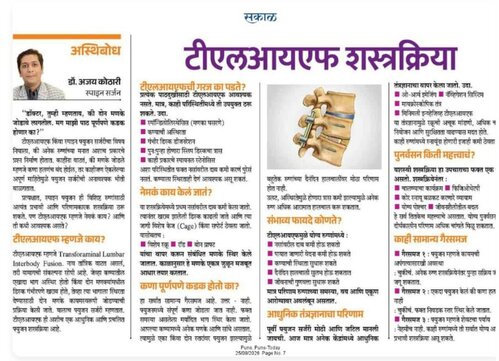
Minimally Invasive TLIF Surgery for Lumbar Spine Minimally Invasive TLIF (Transforaminal Lumbar Interbody Fusion) is an advanced lumbar spinal fusion procedure designed to decompress affected nerves, restore spinal stability, and achieve fusion through a muscle-sparing approach. It is commonly considered for carefully selected patients with lumbar spondylolisthesis—a forward slip of one vertebra over another—particularly at the L4–L5 and L5–S1 levels. Symptoms may include persistent low-back pain, sciatica, numbness, weakness, and difficulty in walking or standing. Technology-assisted precision MIS TLIF is performed through small incisions using specialised instruments and tubular access systems. Depending on the individual case, advanced technology may include: O-arm 3D imaging for intraoperative visualisation Computer navigation for planned and accurate implant placement Robotic guidance for precision in screw trajectory and instrumentation Endoscopic or microscopic assistance for targeted nerve decompression These technologies are intended to improve surgical precision while minimising disruption to muscles and surrounding soft tissues. Navigation-guided MIS-TLIF has demonstrated improved pedicle-screw placement accuracy and less violation of the adjacent facet joint compared with fluoroscopy-guided procedures.[1] Potential advantages When compared with conventional open fusion, MIS TLIF may offer: Smaller incision and reduced muscle injury Less intraoperative blood loss Reduced postoperative pain and earlier mobilisation Shorter hospital stay and faster functional recovery Precise placement of screws and implants with navigation or robotic assistance Less injury to tissues adjacent to the fused level, which may help reduce stress on neighbouring segments Research generally supports lower blood loss and faster postoperative rehabilitation with minimally invasive TLIF, while long-term outcomes should be assessed individually. Robotic and CT-navigation techniques have also shown high pedicle-screw placement accuracy in MIS-TLIF. Is MIS TLIF suitable for everyone? No single technique is right for every patient. The choice between minimally invasive and open fusion depends on the severity and type of slip, number of involved levels, degree of nerve compression, spinal alignment, bone quality, previous surgery, medical fitness, and the surgeon’s assessment. A thorough clinical examination and review of X-rays, MRI, and, when necessary, CT imaging are essential to create a personalised treatment plan. Sources 1. Comparative Radiographic Analyses and Clinical Outcomes Between O-Arm Navigated and Fluoroscopic-Guided Minimally Invasive Transforaminal Lumbar Interbody Fusion https://pmc.ncbi.nlm.nih.gov/articles/PMC9519077/ 2. Long-Term Incidence of Adjacent Segmental Pathology After Minimally Invasive vs. Open Transforaminal Lumbar Interbody Fusion - Jae-Won Shin, Yung Park, Sang-Ho Kim, Sung-Ryul Choi, Joong-Won Ha, Hak Sun Kim, Kyung-Soo Suk, Sung-Hwan Moon, Si-Young Park, Byung-Ho Lee, Ji-Won Kwon, Hee-Min Choi, 2025 https://journals.sagepub.com/doi/10.1177/21925682241254800 3. Comparison of minimally invasive and open TLIF outcomes ... https://pmc.ncbi.nlm.nih.gov/articles/PMC9243253/ 4. Comparison between robot-assisted and navigation-guided ... https://thejns.org/focus/view/journals/neurosurg-focus/57/6/article-pE12.xml 5. Navigation-Guided/Robot-Assisted Spinal Surgery: A Review Article https://pmc.ncbi.nlm.nih.gov/articles/PMC10992634/ 6. Minimally-Invasive midline posterior interbody fusion with cortical bone trajectory screws compares favorably to traditional open transforaminal interbody fusion https://www.ncbi.nlm.nih.gov/pmc/articles/PMC6744604/ 7. Comparison of O-arm navigation and microscope-assisted minimally ... https://pmc.ncbi.nlm.nih.gov/articles/PMC6939115/ 8. Robot-assisted minimally invasive transforaminal interbody fusion: a complete workflow pilot feasibility study https://pmc.ncbi.nlm.nih.gov/articles/PMC11732329/ 9. [Comparison of screw placement guided by O-arm navigation and ultrasound volume navigation in minimally invasive transforaminal lumbar interbody fusion] - PubMed https://pubmed.ncbi.nlm.nih.gov/37987052/ 10. Evolving Navigation, Robotics, and Augmented Reality in Minimally Invasive Spine Surgery - Ibrahim Hussain, Murat Cosar, Sertac Kirnaz, Franziska A. Schmidt, Christoph Wipplinger, Taylor Wong, Roger Härtl, 2020 https://journals.sagepub.com/doi/10.1177/2192568220907896 11. O-arm Navigation Combined With Microscope-assisted ... https://pubmed.ncbi.nlm.nih.gov/30762835/ 12. Comparative cost-effectiveness analysis between navigated robot ... https://www.sciencedirect.com/science/article/abs/pii/S1529943025002554 13. A comparison of ultrasound volume navigation, O-arm navigation, and X-ray guidance for screw placement in minimally invasive transforaminal lumbar interbody fusion: a randomized controlled trial | OrthoScience https://orthoarchives.com/en/orthoscience/article/W4400466886 14. Comparison of Stand-Alone, Transpsoas Lateral Interbody Fusion at L3-4 and Cranial vs Transforaminal Interbody Fusion at L3-4 and L4-5 for the Treatment of Lumbar Adjacent Segment Disease https://www.ijssurgery.com/content/12/4/469 15. Does Minimally Invasive Lumbar Spine Fusion Reduce ... https://www.jmisst.org/journal/view.php?number=378 Book Appointment Call Now
spinesurgeonpune 
Turn Your Back on Back Pain: Dr. Ajay Kothari Book Launch Pune — Highlighting an escalating public health concern, Dr. Ajay Kothari, a renowned spine surgeon in Pune, alongside Dr. Abhinav Bhute, recently launched their new book, Turn Your Back on Back Pain, published by Sakal Publications. The launch event was graced by Amruta Fadnavis, Founder of Divija Foundation, who emphasized that growing dependence on digital devices and sedentary lifestyles are major contributors to modern spine issues. Addressing the audience, Dr. Kothari noted a concerning trend: neck and back pain are no longer confined to older adults, with an increasing number of young people seeking treatment due to excessive screen time, reduced outdoor activity, and poor posture. Supported by medical leaders like Dr. Parag Sancheti, the book aims to cultivate awareness and encourage simple preventive measures, helping individuals make informed lifestyle choices before spinal problems become severe. Links - https://maharashtralokmanch.com/2026/08/06/191600health-awareness-is-key-in-the-age-of-technology-says-amruta-fadnavis/ https://maharashtrawadi.blogspot.com/2026/08/blog-post_254.html https://mymarathi.net/mm-5412/ https://www.talkindianews24.online/2026/08/blog-post_06.html?m=1 https://maharashtralokmanch.com/2026/08/06/health-awareness-is-essential-in-todays-era-of-technology-amruta-fadnavis/ " सध्याच्या तंत्रज्ञानाच्या युगात आरोग्यविषयक जागरूकता आवश्यक" : अमृता फडणवीस https://dhunt.in/15aMSZ By महाराष्ट्र लोकमंच via Dailyhunt
spinesurgeonpune 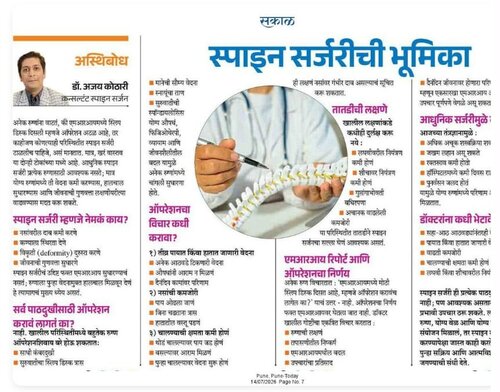
The Importance of Spine Surgery: Knowing When It Matters Back pain is one of the most common health problems worldwide, but the good news is that not every patient with back or neck pain needs surgery. In fact, nearly 90–95% of patients improve with non-surgical treatment, including medications, physiotherapy, lifestyle modifications, and guided pain management. However, some symptoms should never be ignored. Persistent pain lasting several weeks despite treatment, pain radiating to the arms or legs, numbness, weakness, difficulty walking, loss of balance, or problems with bladder or bowel control are important red flags that warrant an early consultation with a spine specialist. Timely diagnosis and treatment can prevent permanent nerve damage and significantly improve quality of life. Surgery is recommended only when it is truly necessary—such as when there is significant nerve compression, spinal instability, deformity, fractures, infections, tumors, or when conservative treatment has failed to provide relief. The field of spine surgery has advanced remarkably over the past decade. Minimally invasive and endoscopic spine surgery, combined with computer navigation, 3D imaging, neuro-monitoring, robotic-assisted surgery, and advanced navigation technologies, has made spine procedures safer, more precise, and more effective than ever before. These innovations result in smaller incisions, less blood loss, reduced pain, faster recovery, shorter hospital stays, and earlier return to daily activities. The key message is simple: Spine surgery is not for everyone—but when indicated, it can be life-changing. Early consultation with a qualified spine surgeon ensures the right diagnosis, appropriate treatment, and the best possible outcome. Thank you #sakal News for this opportunity #BackPain #SpineHealth #SpineSurgery #sanchetihospital #MinimallyInvasiveSurgery #EndoscopicSpineSurgery #RoboticSpineSurgery #Navigation #NeuroMonitoring #PatientEducation #HealthySpine #DrAjayKothari
spinesurgeonpune 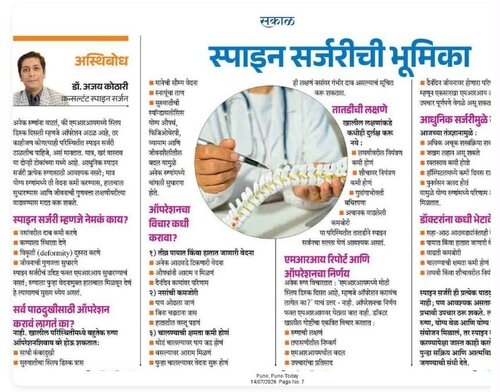
The Importance of Spine Surgery: Knowing When It Matters Back pain is one of the most common health problems worldwide, but the good news is that not every patient with back or neck pain needs surgery. In fact, nearly 90–95% of patients improve with non-surgical treatment, including medications, physiotherapy, lifestyle modifications, and guided pain management. However, some symptoms should never be ignored. Persistent pain lasting several weeks despite treatment, pain radiating to the arms or legs, numbness, weakness, difficulty walking, loss of balance, or problems with bladder or bowel control are important red flags that warrant an early consultation with a spine specialist. Timely diagnosis and treatment can prevent permanent nerve damage and significantly improve quality of life. Surgery is recommended only when it is truly necessary—such as when there is significant nerve compression, spinal instability, deformity, fractures, infections, tumors, or when conservative treatment has failed to provide relief. The field of spine surgery has advanced remarkably over the past decade. Minimally invasive and endoscopic spine surgery, combined with computer navigation, 3D imaging, neuro-monitoring, robotic-assisted surgery, and advanced navigation technologies, has made spine procedures safer, more precise, and more effective than ever before. These innovations result in smaller incisions, less blood loss, reduced pain, faster recovery, shorter hospital stays, and earlier return to daily activities. The key message is simple: Spine surgery is not for everyone—but when indicated, it can be life-changing. Early consultation with a qualified spine surgeon ensures the right diagnosis, appropriate treatment, and the best possible outcome. Book Appointment Call Now
spinesurgeonpune 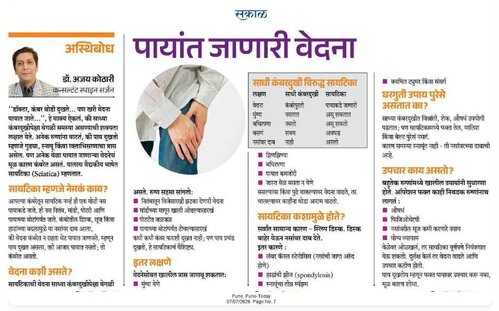
Why does back pain travel down the leg? | Dr. Ajay Kothari Pain that starts in the lower back and radiates down the leg is often caused by Sciatica—a condition where the sciatic nerve gets compressed or irritated in the spine, commonly due to a slipped disc or age-related degenerative changes. The pain may be accompanied by numbness, tingling, or weakness in the leg. However, not every leg pain is sciatica. Hip disorders, vascular problems, muscle conditions, and peripheral nerve disorders can produce similar symptoms. An accurate diagnosis is the key to choosing the right treatment and avoiding unnecessary interventions. Early evaluation can help identify the real cause and ensure timely, effective management. #Sciatica #BackPain #LegPain #SpineHealth #SlippedDisc #NerveCompression #Orthopaedics #SpineSurgery #PatientEducation #HealthySpine Read More:Dr. Ajay Kothari Featured in Sakal on Slipped Disc Awareness and Spine HealthDr. Ajay Kothari Featured in Sakal on MRI and Spine Care Awareness
spinesurgeonpune 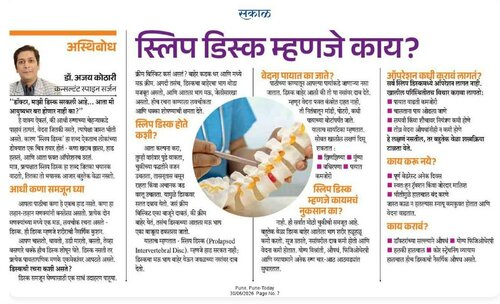
Dr. Ajay Kothari Featured in Sakal on Slipped Disc Awareness and Spine Health Dr. Ajay Kothari, Orthopaedic Spine Surgeon in Pune, was recently featured in Sakal to raise awareness about Slipped Disc (Prolapsed Intervertebral Disc)—one of the most common causes of back pain. Through this informative article, he explained the causes, symptoms, warning signs, and treatment options for slipped disc, while emphasizing the importance of early diagnosis and timely medical intervention. Dr. Kothari highlighted that with appropriate treatment, physiotherapy, lifestyle modifications, and advanced minimally invasive techniques when required, most patients can achieve significant pain relief and return to an active, healthy life. His initiative aims to educate the community about spine health and encourage people not to ignore persistent back pain. Book Appointment Call Now
spinesurgeonpune 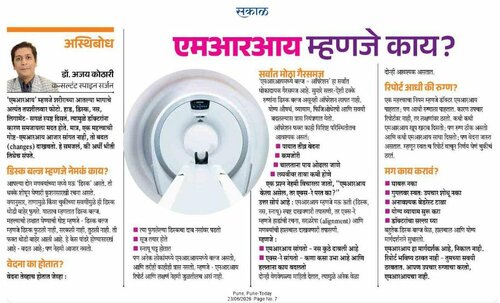
Dr. Ajay Kothari Featured in Sakal on MRI and Spine Care Awareness Dr. Ajay Kothari, Orthopaedic Spine Surgeon in Pune, was recently featured in Sakal to raise awareness about the role of MRI in diagnosing spine conditions and the importance of interpreting scan findings correctly. He explained that while MRI is a powerful tool for visualizing discs, nerves, and other spinal structures, findings such as a disc bulge do not always indicate a serious problem or the need for surgery. Emphasizing that treatment decisions should be based on a patient’s symptoms and clinical examination rather than the MRI report alone, Dr. Kothari highlighted that most disc bulges can be effectively managed with medication, physiotherapy, exercise, and lifestyle modifications. His article encourages patients to make informed decisions and approach spine care with confidence rather than fear. Book Appointment Call Now
spinesurgeonpune 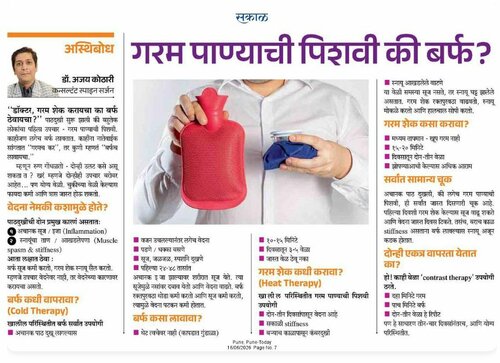
Heat vs Ice Therapy for Pain Relief and Recovery Dr. Ajay Kothari, Consultant Spine Surgeon in Pune, is raising awareness about the correct use of hot fomentation and ice packs for managing pain and injuries. He explains that while cold therapy is most effective during the early stages of acute injuries to reduce swelling and inflammation, heat therapy is generally beneficial for relieving muscle stiffness, chronic pain, and improving blood circulation. Through patient education, he emphasizes that choosing the right therapy at the right time can support faster recovery, prevent complications, and empower patients to make informed decisions about their spine and musculoskeletal health. Book Appointment Call Now
spinesurgeonpune 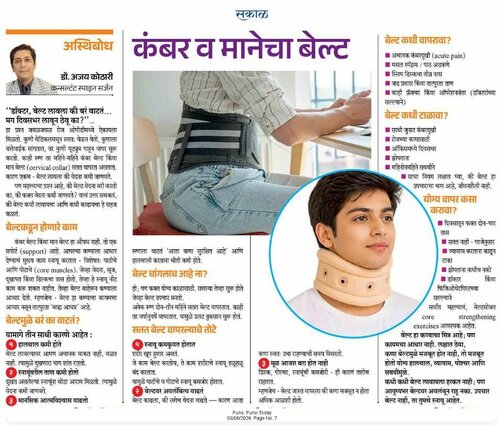
Featured in Sakal on Back and Neck Brace Awareness Dr. Ajay Kothari, Consultant Spine Surgeon in Pune, was honored to be featured in Sakal for sharing expert insights on the appropriate use of back and neck belts/braces in spine care. Through this awareness initiative, he emphasized that while spinal belts and cervical collars can provide temporary support and pain relief, their unnecessary or prolonged use may weaken muscles and hinder recovery. He highlighted the importance of accurate diagnosis, posture correction, physiotherapy, strengthening exercises, and healthy lifestyle habits as the foundation of long-term spine health, helping patients make informed decisions about their care. Book Appointment Call Now
spinesurgeonpune 